Sleep, comfort and materials
Before You Choose an Organic Mattress Topper: Thickness, Materials and Fit
A mattress topper can make a familiar bed feel softer, more cushioned or more temperature-comfortable. But the right choice depends on what you want to change, how your mattress is performing and whether the topper will fit securely. Here’s how to compare organic and natural materials, understand thickness, and set sensible expectations before choosing.
Published 22 November 2026
A topper is one of those bedroom changes that sounds simple: place another layer on the bed and enjoy a different feel. In practice, the result depends on several details working together. The mattress underneath still provides most of the bed’s support. The topper changes the surface, but its material, thickness, firmness and dimensions determine how noticeable—and how suitable—that change will be.
For anyone considering an organic mattress topper, the decision can involve more than comfort alone. You may want to understand what the fibres and fillings are, what a certification actually covers, how the topper is cared for and whether its added height will affect fitted sheets. A little preparation can help distinguish a useful surface adjustment from a costly attempt to solve a problem the topper cannot fix.
Natural latex and wool are two options with distinct characteristics. Latex is generally resilient and responsive; wool tends to create a softer, insulating layer. Neither material is universally best. The more useful question is which combination of feel and function suits your bed, sleeping habits and practical requirements.
First, decide what you want the topper to change
Before comparing materials or thicknesses, describe what feels wrong about your current bed. Is the surface too firm? Do you want a little more cushioning around pressure points? Does the bed feel warm or stuffy? Or are you hoping to make an old mattress feel new again? These concerns may sound similar, but they point to different decisions—and some cannot be resolved by a topper at all.
A topper is most useful when the mattress is still in reasonable condition and you want to adjust its surface feel. For example, a sound but rather firm mattress may feel more welcoming with an added cushioning layer. A topper may also slightly change how the bed feels as you settle into it. The exact effect depends on the material and construction, as well as your body and sleep position.
It is less likely to help when a mattress has deep, persistent sagging, damaged springs, a visibly uneven surface or a loss of support. A topper follows the shape beneath it; it does not repair the mattress. If the foundation is worn or distorted, adding a comfortable layer may briefly disguise the problem without correcting it.
A helpful starting point: identify one clear goal—such as a softer surface or a different temperature feel—rather than expecting a topper to solve every sleep concern at once.
Thickness: how much change are you looking for?
Thickness affects how much material sits between you and the mattress, but it is not a stand-alone measure of comfort. A thicker topper will not automatically be more supportive, and a thinner one is not necessarily better suited to every sleeper. The fill, firmness, density, construction and condition of the mattress all matter.
A relatively slim topper may provide a subtle adjustment to the bed’s surface. It can make a firm-feeling mattress a little more forgiving, while preserving more of the mattress’s original feel. A thicker layer can create a more noticeable change, but it may also make the bed feel quite different and increase the total height of the sleep surface.
Consider how you sleep and where you feel pressure. Side sleepers often seek cushioning at the shoulder and hip, while back and stomach sleepers may prefer a surface that does not feel excessively yielding. These are general preferences, not fixed rules: body shape, personal comfort, mattress firmness and individual health circumstances all influence what feels right.
If you can, compare the topper’s stated thickness with the mattress and bedding you already own. A seemingly modest addition can matter when your fitted sheets are already close to their maximum depth. A deep, soft layer may also alter how easy it feels to move or change position on the bed. Think about the whole sleep setup, not just the topper in isolation.
Natural latex: responsive and resilient
Latex is valued for its springy, responsive feel. Rather than simply compressing without much rebound, it tends to respond as weight shifts across the surface. This can create a cushioned feel while retaining a sense of lift. The degree of softness or firmness varies with the design, thickness and formulation, so the word “latex” alone does not tell you exactly how a topper will feel.
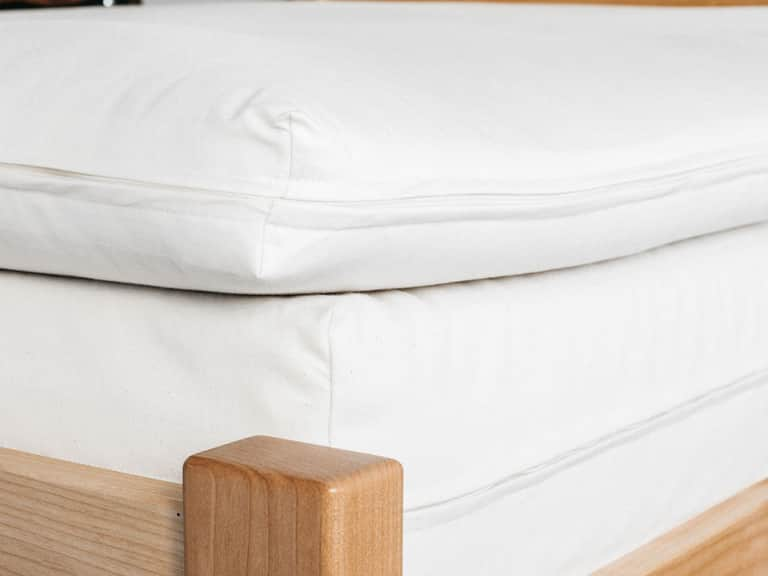
Some natural latex toppers combine a latex core with wool and a cotton cover. That construction brings together materials with different roles: the latex provides the resilient layer, while wool surrounds or covers it and cotton forms the outer fabric. For example, the Natural Wool & Latex Mattress Topper is described as having a two-inch Dunlop latex core wrapped in wool, with an overall depth of three inches. Its listed certifications cover GOLS-certified latex and GOTS-certified organic cotton fabric.
Those specifications can help you assess construction, but they do not guarantee that a topper will suit your comfort preferences or fit every mattress. Check the actual dimensions, firmness description, care requirements and the scope of each certification. In this example, the care information specifies spot cleaning, so it is important to consider whether that level of maintenance works for your household.
Latex can be a reasonable material to explore if you want a resilient surface rather than a purely plush one. Still, comfort is personal. Where possible, use clear product specifications and return terms to inform your choice, and avoid assuming that an organic label predicts a particular feel or will resolve pain, snoring or a diagnosed sleep condition.
Wool: a softer, insulating layer
Wool has a different feel from latex. Depending on how it is layered and secured, it can add a gentle, cushioned surface and a sense of insulation. Wool is also known for managing moisture within the fibre, though the experience of temperature and comfort varies from person to person and depends on the wider bedding setup, room conditions and individual physiology.
A wool topper may appeal if you prefer natural fibres and a softer, less springy surface. However, wool layers can settle with use, and the finished feel depends on the amount and arrangement of the fill. Ask how the topper is constructed, whether its loft may change over time, and what care is recommended. “Natural” does not necessarily mean machine washable or maintenance-free.
When a topper combines wool and latex, the overall feel will reflect both materials rather than either one alone. The latex can contribute responsiveness, while wool provides a surrounding layer. This is why reading the full construction details is more informative than relying on a single material name.
Understanding “organic” and certifications
The word “organic” can refer to different parts of a product. A topper may contain an organically certified component without every material, process or finished part carrying the same certification. Look for specific wording that identifies which material is certified and which standard applies, rather than assuming that the entire item has a single all-encompassing status.
Certifications such as GOLS and GOTS are used for particular material and processing standards. Their presence can provide useful information about the certified component and its supply chain, but they are not a promise of a specific comfort level or a medical benefit. Read the product details carefully, especially where a topper contains several layers, different fibres or a separate cover.
It is also sensible to distinguish marketing language from verifiable specifications. Terms such as “natural,” “clean” or “chemical-free” can be broad and may not explain what was tested or certified. More useful details include the named material, the part of the product it describes, the certification and the body that issued it. When the information is unclear, asking the manufacturer for clarification is a practical step.
Fit: check dimensions, mattress depth and bed setup
Even a promising topper can become a daily frustration if it shifts, bunches or leaves the sheets too tight. Measure the mattress’s length and width rather than relying only on a familiar size label. Mattresses sold under the same size name can vary, and a topper should be compatible with the exact bed dimensions.
- Measure the mattress: record its length and width, and check whether the topper’s stated measurements match.
- Account for the added height: add the topper’s thickness to the mattress depth when checking fitted sheets and protectors.
- Check mattress shape: account for pillow-top profiles, rounded edges or other features that can affect how a topper sits.
- Consider the bed base: ensure the mattress and topper remain stable on the frame, including an adjustable base if you use one.
- Review attachment details: check whether the design includes straps, a skirt or another method to help keep it in position.
A topper’s stated depth is not always the only dimension that matters. A thicker surface can change how deeply you sink into the bed and how much sheet fabric is needed to tuck securely under the mattress. If a fitted sheet barely fits now, adding a topper could make it difficult to keep in place. Check the depth capacity of your bedding before deciding.
Care and everyday practicality
Care instructions deserve attention before purchase, not after a spill. Some toppers can be spot-cleaned only, while their covers may or may not be removable and washable. Natural fillings may need a different approach from ordinary sheets, and heat, bleach or vigorous washing can damage particular materials. Follow the manufacturer’s instructions rather than applying a familiar laundry routine by default.
A mattress protector can help shield the sleep surface from everyday moisture and soiling, but confirm that it fits over the combined mattress-and-topper depth. A protector that pulls tightly may affect how the layers sit. Likewise, a fitted sheet should have enough depth to cover the full stack without slipping off during the night.
Think about your own routines. If the topper will be used in a guest room or by someone who needs straightforward laundering, spot-clean-only care may be less convenient. If you expect to move the topper frequently, consider its size and weight. Details that seem minor at first can shape how easy the bed is to maintain over time.
Set realistic expectations for support and sleep
A topper changes the layer closest to your body; it does not replace the mattress’s underlying support system. It may soften the surface or change the way your body settles, but it cannot reliably correct a sagging mattress, fix poor bed-frame support or diagnose the reason for ongoing discomfort. If the bed is visibly damaged or no longer holds its shape, assess the mattress and foundation first.
It is also worth keeping expectations measured around sleep quality. A comfortable bedroom surface can be one part of a broader sleep routine, alongside a regular schedule, a suitable environment and other habits. A natural or organic material is not a treatment for insomnia, sleep apnoea or another health condition. If sleep problems are persistent or you have symptoms that concern you, seek advice from a qualified healthcare professional.
A practical checklist before choosing
Use these questions to narrow the options without getting lost in technical language:
- Is my mattress still even and supportive, or is it sagging or damaged?
- Do I want a softer surface, a more responsive feel, or a change in how warm the bed feels?
- Would natural latex, wool, or a combination better match that goal?
- How much added depth do I want, and could it affect my fitted sheets or mattress protector?
- Do the topper’s dimensions match my mattress, including any unusual size or profile?
- Which specific materials are certified, and what does each certification apply to?
- Can I follow the care instructions, especially if the topper is spot-clean only?
- Are the available specifications and return terms clear enough for me to make an informed choice?
The bottom line
Choosing an organic mattress topper is less about finding a universally perfect material and more about matching construction to your bed and preferences. Start with the condition of the mattress, decide what you want to change, then compare thickness, feel, fit and care. Natural latex offers a resilient, responsive quality; wool tends to bring a softer, insulating layer. A combined design can include both, but its actual feel depends on how those materials are built together.
Before committing, verify the measurements, check whether your sheets can accommodate the additional height, and read exactly what the certification and care details cover. A well-chosen topper can make a sound mattress feel more comfortable. It is not a repair for worn-out support—and the best choice is the one that fits your real needs, not just the most appealing label.